
The Lucid Gravity: A Star Performer Caught in its Own Orbit
In the high-stakes arena of premium electric vehicles, few names generate as much buzz and expectation as Lucid. The arrival of the Lucid Gravity, the brand’s highly anticipated three-row electric SUV, has been one of the most significant moments in the automotive calendar for 2025. As someone who has navigated the evolving landscape of EVs for over a decade, witnessing countless launches and countless claims, the Gravity presents a fascinating paradox: a vehicle that simultaneously represents a pinnacle of engineering and a frustrating testament to the complexities of modern automotive integration. It’s a machine designed to provoke thought, challenge norms, and in many respects, redefine what a luxury electric SUV can be, yet it frequently trips over its own ambition.
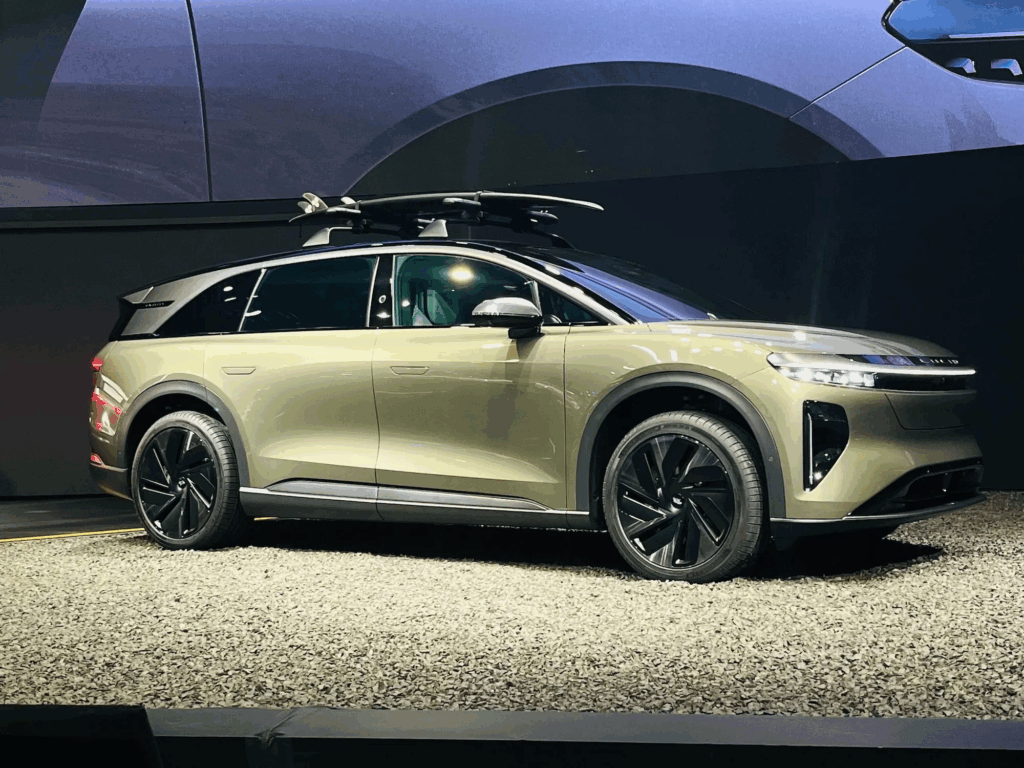
From the moment the Gravity concept debuted, it promised to distill the innovative ethos of the Air sedan into a more versatile, family-friendly package. In 2025, with an increasingly discerning market demanding not just performance but flawless execution, the Gravity enters a crowded field dominated by established luxury players and burgeoning EV startups. Its mission is clear: to deliver an uncompromised luxury electric experience. And in many critical hardware aspects, it delivers in spades. Yet, the story of the Gravity is not merely one of cutting-edge design and blistering speed; it’s a deeper narrative about the chasm that can sometimes exist between visionary engineering and seamless user experience.
Sculpting the Future: Design and Interior Ingenuity
The exterior design of the Lucid Gravity is a masterclass in aerodynamic elegance. Unlike the often bulbous or overly aggressive styling prevalent in the SUV segment, the Gravity projects a sleek, almost monolithic presence. Its lines flow with a purpose, hinting at the efficiency and performance lurking beneath. The expansive glass canopy, a signature Lucid element, bathes the cabin in natural light, creating an airy, open atmosphere that belies its substantial dimensions. This isn’t merely aesthetic; it’s functional, contributing to a sense of spaciousness often lacking in traditional SUVs.
Stepping inside, the Gravity immediately communicates its luxury intent. The cabin is a sanctuary of premium materials, meticulously curated and exquisitely crafted. Sustainably sourced leathers, genuine wood accents, and high-quality metals converge to create an environment that feels both opulent and forward-thinking. Seating comfort across all three rows is exceptional, a feat particularly challenging in a three-row SUV, especially one with such a rakish roofline. Our expert team, ranging in height from the comfortably average to those brushing seven feet, universally lauded the ergonomic considerations. The second-row seating system, mounted on a motorized track, is a testament to clever packaging, providing remarkable flexibility for passenger comfort or cargo expansion. This adaptability allows for a flat load floor, maximizing utility while maintaining the luxury aesthetic. Even the frunk and sub-trunk capacities are impressive, offering practical storage solutions that further enhance the vehicle’s versatility. This thoughtful approach to interior architecture truly sets the Gravity apart, establishing a benchmark for luxury EV interior design. Lucid demonstrates a profound understanding of how to optimize internal volume within a relatively compact exterior footprint, pushing the boundaries of what consumers expect from a premium electric vehicle.
However, even in this realm of design brilliance, subtle cracks appear. The motorized second-row track, while innovative, reveals exposed componentry when folded, an oversight in a vehicle aspiring to such high standards of finish. And while the frosted glass center console lid is a visually appealing element, its dedicated key fob tray proved to be a practical pitfall, prone to jamming if anything beyond the bare fob—like a key tag—was present. These are minor quibbles, perhaps, but they hint at a broader theme: brilliant ideas sometimes need another pass through the crucible of real-world usability testing.
The Driving Revelation: A Supercar in SUV Clothing
Where the Lucid Gravity truly ascends to greatness is in its driving dynamics. This is not just an electric SUV; it is, unequivocally, a high-performance SUV. Whether equipped with the formidable 600-horsepower standard powertrain and dual-chamber air suspension or the staggering 828-horsepower, triple-chamber setup, the Gravity defies its size and weight with a poise and agility that can only be described as supercar-like. The instant torque delivery, characteristic of electric powertrains, is amplified here, launching the Gravity with an urgency that pins you to the seat, yet it does so with a silky refinement that belies its raw power.
The engineers at Lucid have clearly poured their expertise into chassis tuning. The balance between ride comfort and athletic handling is nothing short of phenomenal. The adaptive air suspension system effortlessly glides over imperfections, absorbing road chatter with grace, yet stiffens precisely when pushed into a corner, minimizing body roll and instilling immense confidence. It’s a vehicle that feels equally at home cruising silently on a highway as it does carving through winding mountain roads. The steering is direct and communicative, providing a genuine connection to the road, a rarity in many modern SUVs, electric or otherwise.
For a discerning driver, the Gravity offers an intoxicating blend of power and precision. Its ability to accelerate, brake, and corner with such sophisticated control positions it as a genuine contender for the most engaging EV performance in the SUV segment. This dynamic prowess, bolstered by advanced traction management systems, ensures that all that power is put to the pavement efficiently and safely. It’s a testament to state-of-the-art automotive technology, showcasing what’s possible when electric propulsion is paired with world-class chassis engineering. This isn’t just transportation; it’s an experience designed for those who appreciate the art of driving.
Where the Dreams Falter: The UX and Software Quandary
Despite its breathtaking performance and exquisite design, the Lucid Gravity harbors a significant Achilles’ heel: its user experience and software integration. In 2025, where the digital interface is as crucial as the mechanical, Lucid’s execution falls short of the mark, especially for a vehicle positioned in the ultra-luxury segment. As an expert in the field, I’ve witnessed the rapid evolution of EV user experience, and the Gravity, regrettably, feels a step behind the curve in critical areas.
The most fundamental interaction—getting the vehicle to unlock and start—is surprisingly inconsistent. Whether using the key card, traditional fob, or the mobile app, door unlocking is a gamble, sometimes requiring multiple attempts. Once inside, convincing the Gravity to power on and engage “drive” mode lacks a clear, repeatable methodology, leaving occupants fumbling and frustrated. These are not minor inconveniences; they are basic operational flaws that erode confidence and detract from the premium experience. Having seen similar issues with early Lucid Air models in 2022, it’s perplexing that these foundational problems persist years later, undermining the brand’s reputation for seamless electric vehicle reliability.
The expansive digital cockpit, while visually impressive, presents a steep learning curve. The advanced infotainment system, relying heavily on multiple touchscreens, is not intuitively organized. Finding specific functions often devolves into a hunt through labyrinthine menus, a stark contrast to the elegant simplicity expected from a luxury device. While a few physical buttons exist, they offer insufficient relief from the digital overload. The dual control pads on the unconventional steering wheel, though visually intriguing, feel insubstantial and imprecise, lacking the tactile feedback essential for confidence during driving. Furthermore, visual imperfections like a jagged pixel edge on the upper touchscreen’s curve suggest a lack of polish in the software and display integration, areas where competitors are excelling.
In an era of software-defined vehicles and seamless over-the-air updates, Lucid’s current software stack feels underdeveloped. It leaves owners questioning whether a feature is broken or simply poorly implemented. This constant doubt, coupled with a lack of intuitive design, severely detracts from the otherwise exceptional hardware. The ambition is clear: Lucid aims for a minimalist, futuristic interface. But true minimalism, especially in complex systems, requires profound underlying simplicity and flawless execution, which the Gravity has yet to achieve. This gap between theoretical ambition and practical application is a critical barrier to the Gravity fulfilling its full potential in the fiercely competitive 2025 luxury automotive market.
Powering Up: Charging and Real-World Range
On the charging front, the Lucid Gravity maintains a competitive edge. Equipped with the North American Charging Standard (NACS) port, it benefits from access to a rapidly expanding and increasingly reliable charging infrastructure. Lucid’s 900V+ architecture ensures some of the fastest charging speeds in the industry, rivaling and often surpassing competitors. During our tests, the Gravity demonstrated its ability to add significant range in remarkably short periods, a crucial advantage for road trips and busy lifestyles. This fast charging capability is a non-negotiable for a premium EV and Lucid clearly understands this.
However, like many electric vehicles, the Gravity’s real-world range, while excellent, often falls short of its ambitious official ratings. While its long-range EV capabilities are undoubtedly impressive, drivers should anticipate a slight variance depending on driving style, environmental conditions, and cargo load. This isn’t unique to Lucid, but in a market where range anxiety remains a psychological hurdle for some, managing expectations is key. For most users, the Gravity’s range will be more than sufficient, making long-distance travel a viable and enjoyable prospect, especially with the increasingly robust NACS network.
Lucid’s Trajectory and The Road Ahead
The Lucid Gravity arrives in a dynamic 2025 competitive EV landscape. It stands as a profound statement of engineering prowess, a testament to what’s possible when a company dares to push boundaries in design, performance, and efficiency. Yet, its journey is also a cautionary tale about the immense challenge of marrying exquisite hardware with equally sophisticated software and user experience. The original Lucid Air, while groundbreaking, was afforded a degree of leniency as an emerging product from a new manufacturer. After four years of development and months on the market, the Gravity faces a higher bar. Consumer expectations for fully resolved, intuitive digital ecosystems are at an all-time high, particularly in the luxury segment.
Lucid has clearly crafted a masterpiece in aluminum and lithium, pushing the boundaries of what’s physically achievable in an electric vehicle. Had they replicated that same level of mastery in code and user interface design, the Gravity would be an undisputed champion. It embodies the essence of next-gen EV technology, a symbol of sustainable luxury with its zero-emission credentials and advanced materials. The potential for the Gravity to become an iconic vehicle is immense, provided Lucid can rapidly iterate and refine its software and user interaction. The foundation is undeniably solid; the digital wrapper simply needs to catch up.
Final Thoughts: A Glimpse of the Future, Still Unfolding
The Lucid Gravity is a vehicle of profound contrasts. It inspires awe with its breathtaking performance, sophisticated design, and brilliant packaging, representing a true engineering marvel. Yet, it frustrates with its unpolished software and usability quirks that detract from the overall luxury experience. It’s a vehicle that sparks debate – a testament to its ambition and the high stakes of its market position.
Ultimately, the Gravity is a vehicle that offers a compelling glimpse into the future of luxury electric mobility. It’s a bold statement, imperfect but undeniably brilliant in its core engineering. It serves as a powerful reminder that in the age of connected, software-defined vehicles, the driving experience extends far beyond horsepower and chassis dynamics. It encompasses every interaction, every touch, every moment the user engages with the machine. Lucid has given us an astounding piece of hardware; now, the imperative is to make it equally seamless to live with.
If you’re ready to explore the cutting edge of electric luxury and witness firsthand the exhilarating potential—and current complexities—of the Lucid Gravity, we invite you to experience this extraordinary vehicle for yourself. Visit your nearest Lucid studio or schedule an extended test drive to form your own expert opinion on where the future of premium electric SUVs is heading.