
The Unseen Glitch: How a Savile Silver Sheen Led to Unexpected Braking in the Genesis G90
As an automotive expert with over a decade immersed in the electrifying pace of vehicle innovation, I’ve witnessed the transformative power of Advanced Driver-Assistance Systems (ADAS). From adaptive cruise control to sophisticated highway driving aids, these technologies promise a safer, more convenient future on our roads. Yet, as with any cutting-edge development, unforeseen challenges can arise from the most unexpected corners. Such is the intriguing case of the Genesis G90, where a seemingly innocuous paint color—Savile Silver—unintentionally triggered a series of events leading to a recall that illuminates the intricate dance between advanced sensors and vehicle aesthetics.
The year 2025 finds us squarely in an era where Level 2+ autonomous capabilities are becoming standard, blurring the lines between human and machine control. Drivers have grown accustomed to their vehicles proactively assisting them, from maintaining lane position to initiating emergency braking. This increasing reliance on complex sensor arrays, sophisticated algorithms, and instantaneous decision-making processes means that every component, no matter how seemingly trivial, plays a critical role in the system’s integrity. The Genesis G90 incident isn’t just a recall; it’s a profound lesson in the often-unseen vulnerabilities inherent in our increasingly intelligent vehicles.
Unpacking the Genesis G90’s Savile Silver Anomaly
The core of the issue, as identified by Genesis and corroborated by the National Highway Traffic Safety Administration (NHTSA), revolved around specific 2023-2026 G90 models adorned in Savile Silver paint. Owners of these luxurious sedans, particularly when engaging the Highway Driving Assist (HDA) system, reported instances of their vehicle unexpectedly applying the brakes. This wasn’t a phantom brake event caused by a software bug in the traditional sense, but rather a fascinating interplay between the vehicle’s metallic finish and its sensitive front corner radar sensors.
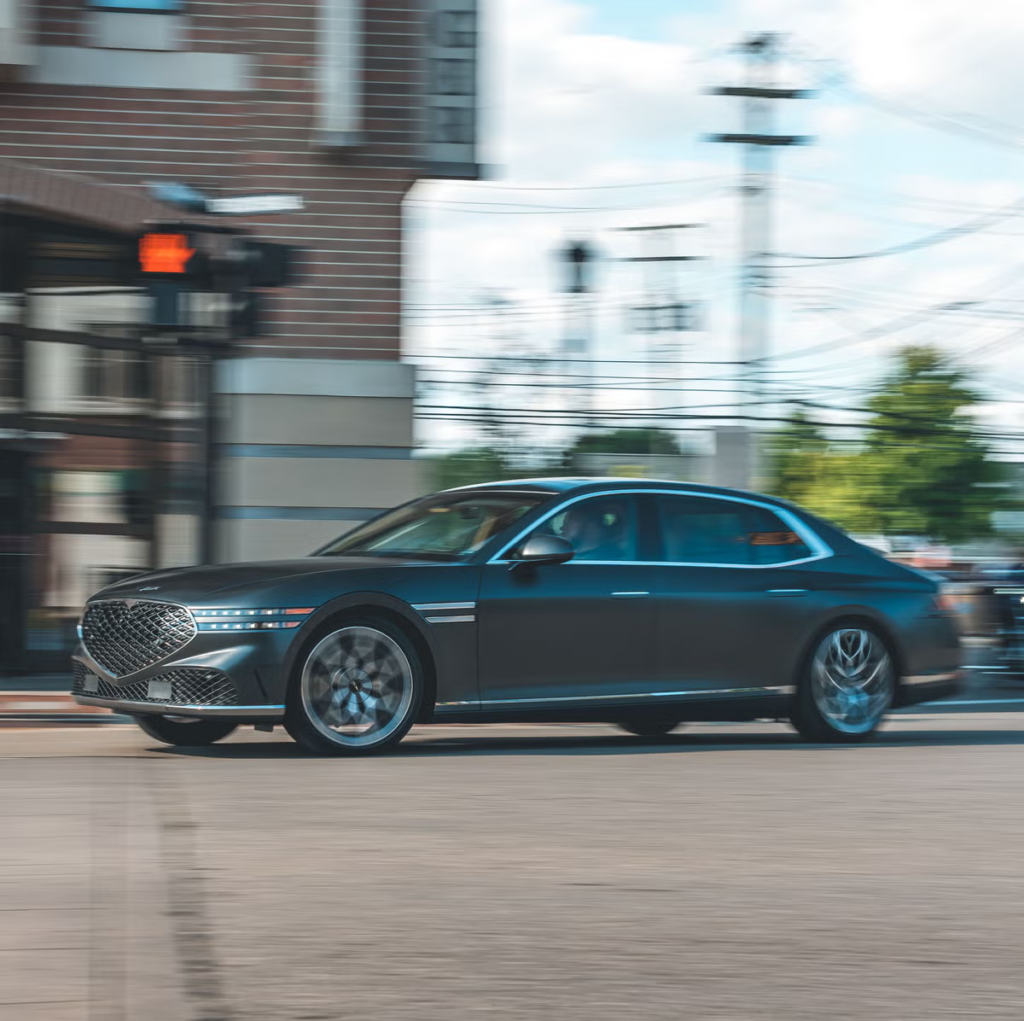
Specifically, the Savile Silver paint, due to its unique metallic composition, contains aluminum particles designed to give it that lustrous, multi-dimensional sheen. What’s beautiful to the human eye, however, proved to be a challenging reflective surface for the high-frequency radar waves emitted by the G90’s ADAS sensors. These radar units, crucial for detecting obstacles, other vehicles, and lane boundaries, were, in essence, being tricked. The aluminum flakes in the paint were reflecting the radar signals in a way that mimicked the presence of another object—a “false positive” signal indicating a vehicle entering the lane or an imminent collision, especially at lower speeds (below 12 mph) or during lane change maneuvers initiated via Lane Change Assist.
The result was the G90’s automated braking system engaging without actual need, causing confusion, potential rear-end collision risks from following traffic, and significantly eroding driver confidence in a premium luxury sedan designed for unparalleled comfort and safety. Genesis reported 11 such incidents before the defect was officially recognized, underscoring the subtle yet critical nature of the flaw.
The Technical Deep Dive: Radar, Reflectivity, and Real-World Challenges
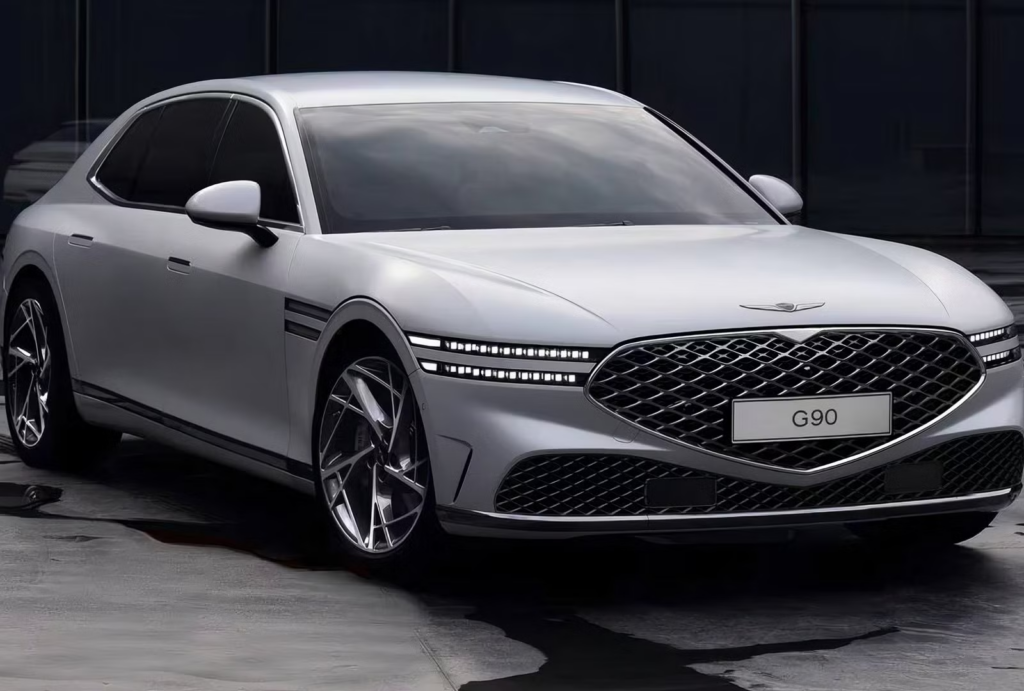
To truly appreciate the complexity of this recall, we need to delve into the technical underpinnings. Automotive radar systems are a cornerstone of modern ADAS, operating on principles similar to military radar but optimized for short to medium-range detection in dynamic environments. They emit radio waves and analyze the returning echoes to determine the range, velocity, and angle of objects.
How Radar Works in ADAS:
Frequencies: Automotive radars typically operate in the 24 GHz, 77 GHz, or 79 GHz bands, providing excellent range and resolution, even in adverse weather conditions where optical sensors (cameras) might struggle.
Reflection: When radar waves hit an object, a portion of the energy is reflected back to the sensor. The characteristics of this reflection—its strength, phase, and frequency shift (Doppler effect)—provide vital data.
Signal Processing: Sophisticated algorithms process these reflected signals to construct a real-time “picture” of the vehicle’s surroundings, identifying objects, classifying them (e.g., car, pedestrian, stationary obstacle), and predicting their trajectories.
The G90’s front corner radars are specifically tuned for close-range detection, critical for functions like blind-spot monitoring, rear cross-traffic alert, and, in this case, assisting with lane changes and low-speed braking scenarios. The critical factor here is radar cross-section (RCS), which is a measure of how detectable an object is by radar. Materials, shapes, and angles all influence RCS. Highly reflective materials, like metals, tend to have higher RCS.
The Paint Problem:
Metallic paints are formulated by suspending tiny metal flakes (often aluminum) within the paint resin. These flakes are designed to align semi-randomly, catching and reflecting light to create a sparkling, deep effect. While superb for aesthetics, their interaction with electromagnetic waves, particularly radar frequencies, can be unpredictable. In the case of Savile Silver, it appears the concentration, size, or orientation of these aluminum particles within the front bumper area created an anomalous radar return. Essentially, the paint itself was acting as a false target, reflecting the radar waves back to the sensor in a pattern that the G90’s system interpreted as an incoming object—a ghost in the machine born of metallic luster.
This highlights a fascinating tension between industrial design and engineering robustness. Automotive designers push for unique finishes and aesthetics, while engineers demand materials that are optically, electrically, and mechanically stable and predictable. The G90 recall underscores that in an ADAS-driven world, even the choice of exterior paint color can have profound implications for vehicle safety standards 2025.
Industry-Wide Implications and the Future of ADAS Safety
While this specific recall affects a relatively small number of Genesis G90 vehicles (483 units), its implications resonate much wider. It serves as a potent reminder for the entire automotive industry, especially as we advance towards higher levels of autonomy.
Lessons Learned for OEMs:
Material Science Integration: This incident emphasizes the need for even more rigorous cross-functional testing between design, material science, and sensor engineering teams. Paint, trim, and other exterior materials must be vetted not just for durability and appearance, but also for their radio-frequency transparency or reflectivity characteristics.
Sensor Fusion Robustness: Modern ADAS relies heavily on sensor fusion challenges, combining data from various sensor types (radar, camera, lidar, ultrasonic) to create a comprehensive environmental model. A false positive from one sensor should ideally be cross-referenced and validated by others. While HDA uses multiple sensors, the specific context (low speed, lane change, corner radar) might have allowed the radar anomaly to dominate the decision-making in these instances. Enhancing the sophistication of fusion algorithms to detect and reject such anomalies becomes crucial.
Real-World Validation: Laboratory testing, while extensive, cannot always replicate every conceivable real-world scenario. The G90 issue underlines the value of extensive field testing and early reporting mechanisms to catch such subtle defects that only manifest under very specific conditions.
By 2025, consumers expect ADAS technology safety to be paramount. Incidents like these, though rare, can erode trust in automated driving systems risks and capabilities. For premium brands like Genesis, competing in the fiercely competitive luxury sedan safety features segment, maintaining impeccable reliability and safety is paramount to their brand image and long-term success.
Genesis’s Swift Response and the Path to Remedy
Genesis, to their credit, moved swiftly to address the issue. The recall encompassed 2023-2026 G90 models produced between April 21, 2022, and October 13, 2025. The production of Savile Silver was promptly paused, demonstrating a commitment to resolving the defect before further vehicles entered the market.
The proposed fix is surprisingly straightforward and elegant: sealing the front bumper beam. This solution involves applying a non-conductive, radar-transparent material or sealant to the internal structure of the bumper where the radar sensors are mounted and where the problematic reflections were occurring. By creating a barrier or altering the reflective properties in that specific internal area, the false radar returns are eliminated without altering the vehicle’s exterior aesthetics.
Owners of affected vehicles are being notified by Genesis and their dealers. The remedy is provided free of charge, regardless of warranty status, a standard practice for safety recalls mandated by the NHTSA. Until the fix is implemented, Genesis advises Savile Silver G90 owners to avoid using the Highway Driving Assist function, especially at low speeds or during active lane change attempts, prioritizing driver control and safety. This proactive consumer advice is a hallmark of responsible OEM automotive solutions in a safety-critical environment.
The Broader Context: Material Science Meets Digital Intelligence
This incident is more than just a car recall; it’s a compelling narrative about the challenges at the intersection of material science and digital intelligence in the modern automotive landscape. We are building cars that think, see, and react, but their “perceptions” are entirely dependent on the physical world they interact with. A seemingly inert material like paint, designed for aesthetic appeal and corrosion resistance, can become an active participant in the complex electromagnetic dialogue between sensors and surroundings.
The future of automotive technology, particularly in areas like advanced driver assistance systems future and ultimately autonomous vehicles, will hinge on overcoming such subtle yet significant hurdles. This means investing more heavily in integrated design processes, sophisticated simulation tools that account for material properties at various frequencies, and robust validation protocols that push systems to their absolute limits in diverse real-world conditions. It’s about ensuring that every component, from the high-tech radar unit to the shimmering metallic paint, works in perfect harmony to deliver on the promise of safer, smarter driving.
Your Journey, Your Safety
The Genesis G90 Savile Silver recall is a powerful reminder of the intricate engineering behind every luxury vehicle and the constant evolution required to maintain peak safety and performance. As we embrace the incredible advancements in ADAS and semi-autonomous driving, staying informed is key. Your vehicle is a marvel of modern technology, but understanding its nuances, including potential recalls and the reasons behind them, empowers you to make the most informed decisions about your driving experience.
Do you own a Genesis G90 in Savile Silver, or have you experienced unexpected ADAS behavior in any vehicle? Share your insights and experiences below. Staying engaged with our automotive community helps us all navigate the road ahead with greater awareness and confidence. Visit your local Genesis dealer or the NHTSA website for the latest updates on this recall and to ensure your vehicle is operating at its safest potential.