
Future Toyota Celica Sport Will Feature AWD Hybrid Powertrain
Toyota is reportedly set to revive its iconic Celica nameplate, with the upcoming model anticipated to be called the Celica Sport. This new sports car is expected to showcase an advanced all-wheel-drive (AWD) hybrid powertrain, marking a significant evolution for the legendary name.
Recent insights from a Gazoo Racing (GR) executive suggest that the next generation of Toyota’s sports car will indeed bear the Celica Sport moniker. This development comes as the fifth-generation Toyota Supra approaches the end of its production run, signaling Toyota’s continued commitment to the performance car segment. The confirmation of a new Celica, first hinted at in late 2024, has generated considerable excitement among enthusiasts and industry observers alike.
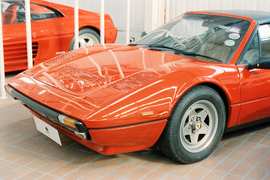
The prospect of an all-wheel-drive system in the new Celica pays homage to the nameplate’s storied rally heritage. The fourth-generation Celica All-Trac Turbo, introduced in the mid-1980s, famously featured AWD, establishing a legacy of performance and capability on the world stage. While earlier Celica generations were offered in front-wheel-drive and rear-wheel-drive configurations, the reintroduction of AWD underscores Toyota’s intention to deliver a vehicle that honors its competitive roots.
Evidence of this heritage was recently observed in Portugal, where a camouflaged Toyota rally car was spotted undergoing testing. The prototype, resembling a compact coupe, bears a striking resemblance to the upcoming Celica, leading many to speculate that it will serve as Toyota’s next contender in the World Rally Championship (WRC). With the current Yaris-based rally car slated to become ineligible for the 2027 WRC season, the timing aligns perfectly for the introduction of a new rally-bred challenger.
The powertrain of the forthcoming Celica is expected to be a sophisticated hybrid system, centered around a new turbocharged 2.0-liter four-cylinder engine. This engine, codenamed G20E, was first previewed in the mid-engined GR Yaris M concept at the 2025 Tokyo Auto Salon. Industry insiders suggest that this new engine will also power the anticipated revival of the Toyota MR2, creating a formidable trio of next-generation performance cars alongside the Celica.
According to Autocar, GR marketing manager Mikio Hayashi indicated that the adoption of a 2.0-liter engine size is necessitated by evolving emission regulations, which current smaller displacement engines may struggle to meet. While the specific configuration—whether a standard hybrid or a plug-in hybrid—has yet to be finalized, Hayashi confirmed that development is well underway. “We are continuing to develop that. We have high expectations,” he stated, adding that while no definitive timeline exists, “we are making steady progress.”
The design of the new 2.0-liter engine is noteworthy for its compact dimensions. To optimize packaging within the vehicle’s chassis, Toyota engineers have reportedly shortened the piston stroke compared to existing engines. This engineering decision not only facilitates integration but also helps to mitigate the weight implications associated with hybrid components, such as the battery and electric motor. Consequently, the performance penalty typically incurred by hybrid systems is expected to be minimal, allowing the Celica to maintain a lightweight and agile character.
While specific power figures remain speculative, previous reports have suggested that the hybrid powertrain could deliver around 400 horsepower. German publication Auto Motor und Sport has even posited that with the addition of a larger turbocharger, the system’s output could potentially exceed 600 horsepower, placing it in the realm of supercar performance. Such power levels, when combined with the projected AWD system and lightweight construction, would create a vehicle capable of challenging the most established sports cars on the market.
The implications of this new powertrain extend beyond the Celica itself. It is widely anticipated that versions of the 2.0-liter hybrid engine will also find their way into other GR-branded vehicles. The GR Yaris, a homologation special that has garnered critical acclaim, is a likely candidate for an updated powertrain, particularly in European markets where emission standards are stringent. In the United States, the GR Corolla, Toyota’s current hot hatch offering, could benefit from the enhanced performance and efficiency of the new engine.
The strategic alignment of these powertrain developments underscores Toyota’s broader electrification strategy. As the automotive industry transitions towards electrified mobility, Toyota is demonstrating that performance and electrification can coexist harmoniously. By leveraging its expertise in hybrid technology, pioneered through models like the Prius, and its growing prowess in performance engineering through Gazoo Racing, Toyota is poised to redefine expectations for the modern sports car.
The timing of the Celica Sport’s introduction is particularly significant. With the Supra’s departure imminent, the market segment for Toyota’s accessible sports car offerings will have a clear successor. The Celica has historically occupied a unique position in the market, offering a compelling blend of performance, style, and value. The new model is expected to carry forward this ethos, providing an engaging driving experience for a broad spectrum of enthusiasts.
The competitive landscape for the Celica Sport will be formidable. In the compact sports car segment, the vehicle will face competition from established players and emerging entrants alike. The Honda Civic Type R remains a benchmark for front-wheel-drive performance, while the Volkswagen Golf R offers a compelling all-wheel-drive alternative. Furthermore, the automotive market has witnessed the emergence of new performance-oriented electric vehicles, which are rapidly gaining traction.
However, Toyota’s approach to hybridization offers a distinct advantage. By integrating electric power with a turbocharged internal combustion engine, the Celica Sport can deliver the instant torque characteristics that electric vehicles are known for, while retaining the visceral engagement and extended range capabilities of a traditional sports car. This hybrid architecture also positions Toyota favorably to navigate the evolving regulatory landscape across different global markets.
The manufacturing strategy for the new Celica is also a subject of considerable interest. Given the shared powertrain architecture with the GR Yaris and GR Corolla, it is plausible that the Celica could be produced at one of Toyota’s existing manufacturing facilities that specialize in performance vehicles. This approach would leverage existing infrastructure and expertise, enabling a more efficient production rollout and helping to control costs.
The production of the Celica in the 1970s and 1980s was a landmark moment in Japanese automotive history, helping to establish Toyota’s reputation for producing reliable and enjoyable sports cars. The nameplate’s revival in the current era would resonate deeply with a generation of enthusiasts who grew up admiring the Celica’s rally success and street presence. The “Sport” designation in the new model’s name further reinforces this connection to its performance heritage.
Looking ahead, the development of the Celica Sport will undoubtedly capture the attention of automotive journalists and enthusiasts worldwide. The coming months are expected to bring further revelations about the vehicle’s design, technical specifications, and production timeline. As Toyota continues to refine its next-generation sports car, the industry watches with anticipation to see how the company will blend its storied past with its electrified future.
The success of the Celica Sport will hinge on its ability to deliver a compelling package that balances performance, efficiency, and emotional appeal. The market’s receptiveness to the Celica nameplate has been clearly demonstrated, and with the promise of advanced hybrid technology and all-wheel-drive capability, the new model has the potential to become a defining vehicle in the evolving landscape of performance automobiles. As Toyota embarks on this exciting new chapter, the Celica Sport stands poised to write its next great story.