
Kia’s 2025 U.S. EV Playbook: Navigating Tariffs, Market Shifts, and the Quest for Affordable Electric Vehicles
The automotive industry, particularly the burgeoning electric vehicle (EV) segment, remains a crucible of innovation, policy shifts, and dynamic market forces. As we navigate the complexities of 2025, few narratives illustrate this better than Kia’s strategic recalibrations for its U.S. electric lineup. What began with ambitious electrification roadmaps now contends with significant headwinds, primarily from volatile trade tariffs and an evolving consumer landscape post-EV tax credit adjustments. Having watched this sector intently for over a decade, it’s clear that the path to widespread EV adoption in America is less a smooth highway and more an intricate, winding road requiring constant adaptation.
Kia, a brand that has demonstrated remarkable agility and foresight in recent years, finds itself at a critical juncture. Its plans for expanding its affordable electric vehicles in the U.S. market, specifically models like the highly anticipated EV4 and a dedicated electric pickup, are currently stalled, subject to the unpredictable winds of global trade policy. This isn’t just about specific model delays; it’s a profound strategic challenge that could reshape Kia’s entire 2025 automotive product strategy for the American consumer, impacting not only electric offerings but also the competitive pricing of its popular gasoline-powered imports.
The Tariff Tempest: A Geopolitical Headwind Reshaping Automotive Strategy
At the heart of Kia’s current predicament lies the ongoing US automotive tariffs situation. What might seem like abstract policy discussions on Capitol Hill translates directly into tangible impacts on manufacturing costs, retail prices, and ultimately, consumer choice. For years, automakers have operated within a relatively stable international trade framework. However, the last few years have introduced a new layer of uncertainty, particularly concerning goods imported from key manufacturing hubs.
The core issue stems from fluctuating tariffs applied to vehicles, auto parts, and even raw materials like steel and aluminum. For months, the U.S. had applied a 25 percent tariff on imported automobiles and parts from certain regions, a significant burden for any global manufacturer. While there was a discernible shift in policy late last year, with reductions bringing auto tariffs down to 15 percent – aligning them with rates from countries like Japan and the EU – the stability isn’t fully assured. Moreover, specific material tariffs, such as the persistent 50 percent levy on Korean steel, aluminum, and derivative products, continue to inflate automotive supply chain costs.
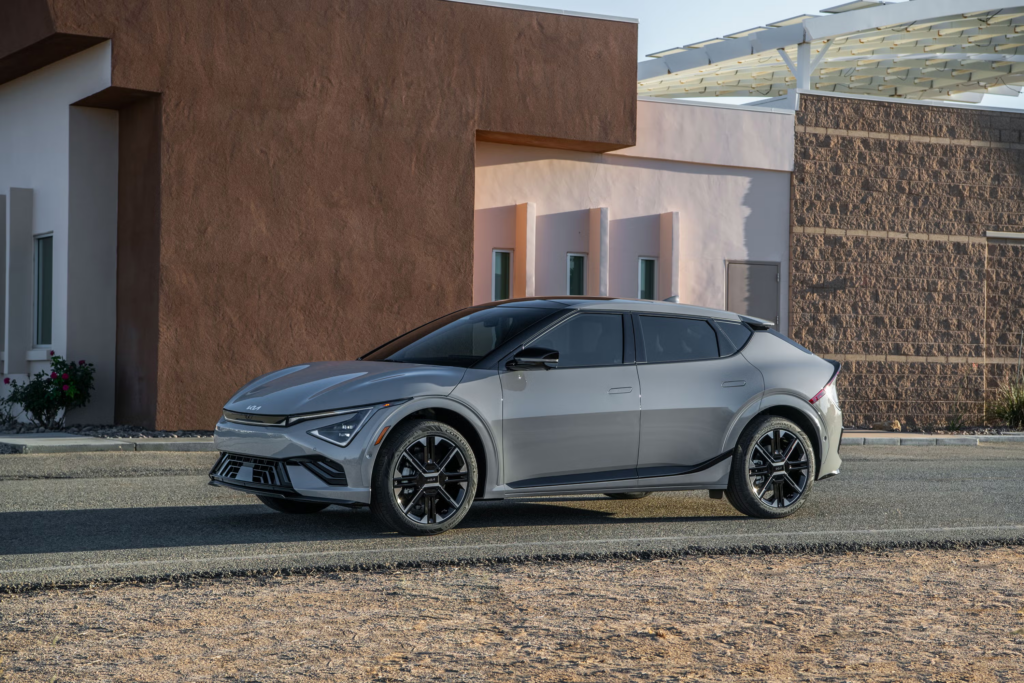
From an expert vantage point, the sheer unpredictability of these tariff regimes is as damaging as the tariffs themselves. When a manufacturer designs and engineers a vehicle like the Kia EV4 with an initial assumption of zero percent tariffs, a sudden shift to 15 or 25 percent can entirely dismantle the economic profitability analysis electric vehicles for that model. Each percentage point directly eats into profit margins, making it challenging to hit target affordable electric car price points while maintaining investment in future R&D. This environment forces brands to either absorb prohibitive costs – a tactic with diminishing returns – or pass them on to consumers, which inevitably impacts sales volume in a fiercely competitive market. Global trade policy impact has become a primary agenda item for every major automotive CEO.
Kia’s EV Lineup: Navigating the Shifting Sands of 2025
Kia’s electric ambitions are clear, but their execution in the U.S. is a complex dance with market realities. The brand has already launched its flagship EV9 and the sporty EV6, both assembled at its Georgia plant, leveraging domestic production to bypass some tariff issues and potentially qualify for federal incentives. However, the next wave of EVs, intended to broaden accessibility, faces a different battle.
The EV4 Conundrum: A Pause for Pricing Stability
The Kia EV4 was poised to be a game-changer, envisioned as a lower-cost EV entry positioned well under the $40,000 mark. Its production commenced in South Korea earlier this year, and it’s already slated for a January 2026 launch in Canada. Yet, for the U.S. market, its Kia EV4 US launch remains in an “indefinite delay.” This decision, as confirmed by Kia America executives, directly ties into the tariff uncertainty.
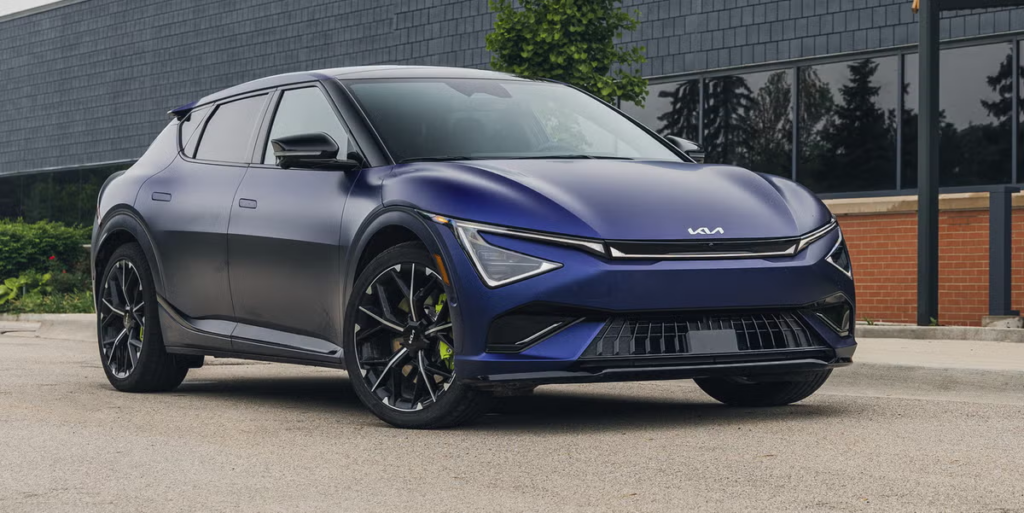
When the financial modeling for the EV4 was conducted, it was based on a different trade landscape. Reintroducing it into a 15 or 25 percent tariff environment would necessitate a significant price hike, potentially pushing it out of its intended affordable EV segment. For a brand like Kia, which thrives on delivering exceptional value, compromising on that price point is a critical strategic consideration. The reevaluation of the EV4’s business case hinges entirely on a more stable and favorable tariff situation, highlighting the delicate balance between market demand and geopolitical realities.
The Steadfast EV3: A Glimmer of Hope for Mass Market EVs
Amidst the EV4’s limbo, the Kia EV3 crossover stands a stronger chance for U.S. market entry. While its Kia EV3 price point and official timing are still TBD, the executive team maintains that there’s simply more inherent consumer demand for small electric SUVs. Crossovers generally outperform sedans in U.S. sales, making the EV3 a more resilient proposition even with tariff pressures. Its potential to tap into the affordable electric vehicles segment, particularly for families seeking practicality and efficiency, makes it a strategic imperative for Kia. The success of models like the Hyundai Kona Electric further validates the market appetite for compact, value-driven electric crossovers.
The Electric Pickup Predicament: Back to the Drawing Board
Just a year ago, Kia officially confirmed its plans for a U.S.-bound electric pickup truck. This was met with considerable excitement, given the enduring popularity of trucks in the American market. However, by late 2025, the project has reportedly reverted to the “evaluation stage.” This strategic retreat isn’t unique to Kia; the electric pickup truck market trends have shown considerable volatility. Competitors like Ford, with its F-150 Lightning, have experienced pricing rollercoasters and production pauses, signaling a more challenging landscape than initially anticipated.
The U.S. truck market is fiercely loyal and price-sensitive, particularly for work vehicles. Introducing a new electric pickup, especially one potentially subject to the prohibitive 25 percent “chicken tax” (on imported light trucks) plus additional tariffs, presents an insurmountable economic hurdle. Kia’s Tasman pickup, popular in Australia, would face such a barrier, making its US importation unviable. For Kia, an electric truck must not only be capable and competitive but also economically feasible to produce and sell at scale. The future of electric trucks in the U.S. hinges on more than just engineering prowess; it demands a clear path to profitable EV manufacturing and competitive EV market share.
The Post-Tax Credit Reality and Market Pragmatism
Beyond tariffs, the American electric vehicle market forecast 2025 is undergoing a significant maturation. The EV tax credit expiration impact has been profound. For several years, federal incentives were a powerful catalyst, propelling the EV market share towards double digits (around 10 percent). However, with the full expiration of key tax credits, the market has visibly softened. Kia, for instance, reported a drop in its EV sales to around 4 percent last month, a stark contrast to previous growth trajectories.
This isn’t necessarily a sign of a shrinking market, but rather a transition from an early-adopter-driven phase to a more pragmatic EV consumer adoption landscape. Mainstream buyers are entering the market with different priorities: not just environmental consciousness, but also concerns about EV charging infrastructure development, upfront cost, range anxiety, and total cost of EV ownership. These consumers are less swayed by tax incentives and more by direct utility and affordability.
Automakers, including Kia, are now grappling with this nuanced reality. They anticipate a clearer picture by early 2026, once the market fully digests the absence of the tax credit and consumer buying patterns stabilize. This shift underscores the importance of a diverse EV portfolio, offering compelling options at various price points, alongside robust charging solutions and transparent ownership costs. The EV market trends of 2025 demand flexibility and a deep understanding of evolving consumer preferences.
The Ripple Effect: Beyond EVs to the Entire Lineup
The tariff situation’s tendrils extend far beyond the EV segment, threatening Kia’s broader automotive pricing strategy across its entire U.S. portfolio. Price-conscious gasoline imports, such as the compact K4 sedan (replacement for the Forte) and the popular Seltos crossover, are also vulnerable. These models often operate on tighter margins, where every percentage point of tariff can significantly impact profitability and competitive positioning.
Other automakers have reportedly raised prices in response to these cost pressures, often seeing a corresponding dip in sales volume. Kia, so far, has largely absorbed these increases, a testament to its commitment to maintaining value for consumers. However, as executives have underscored, this strategy is unsustainable indefinitely. If automotive import tariffs remain elevated, Kia will eventually be forced to make the difficult business decision to raise vehicle pricing strategies 2025 across its lineup. This is a delicate “game of chicken” within the competitive automotive landscape, where an early move can yield market share loss, but delayed action can erode financial health. The long-term supply chain cost management becomes paramount for overall brand health.
A Look Ahead: Strategic Agility in a Volatile Market
As we conclude 2025, Kia’s journey in the U.S. market serves as a powerful case study in strategic adaptation. The convergence of unpredictable trade policies, a maturing EV market, and evolving consumer expectations demands extraordinary agility from even the most established players. While the immediate outlook for models like the EV4 and an electric pickup remains contingent on a more stable tariff environment, Kia’s underlying commitment to electrification and delivering value-driven vehicles remains steadfast. Its ability to pivot, leverage domestic production where possible, and continuously re-evaluate its product mix will define its success in the dynamic years ahead.
The question isn’t whether Kia will electrify, but how it will do so profitably and competitively in a market shaped by forces both within and beyond its control. As the dust begins to settle on these complex issues, what innovations and value propositions will truly differentiate the winners from the rest?
We invite you to join the conversation: What are your thoughts on the biggest challenges facing EV adoption in 2025? How do you think automakers like Kia should navigate these turbulent waters? Share your insights and predictions for the future of the American automotive market in the comments below!