



U.S. Auto Market’s Tariff Tightrope: How Kia’s EV Ambitions Navigate a Shifting 2025 Landscape
For nearly a decade, I’ve had a front-row seat to the automotive industry’s seismic shifts. From the initial EV buzz to the current recalibration, and the ever-present specter of global trade policies, it’s been a relentless evolution. As we close out 2025, one narrative dominates my conversations with industry peers and analysts: the delicate dance between innovation, consumer demand, and the heavy hand of international tariffs. No brand embodies this struggle more acutely right now than Kia, whose ambitious electric vehicle rollout in the vital U.S. market finds itself navigating a veritable minefield of economic uncertainty.
The promise of affordable, compelling EVs from Kia has been a beacon for many seeking to embrace electrification without breaking the bank. Yet, the path to American showrooms for models like the keenly anticipated EV4 remains shrouded in doubt, while even the future of a dedicated electric pickup seems less assured than it did just a few quarters ago. This isn’t merely a hiccup in a product roadmap; it’s a profound strategic challenge that could reshape Kia’s U.S. portfolio, impact consumer pricing across its entire range, and offer a stark case study in the complexities of modern automotive trade policy.
The Tariff Conundrum: A Geopolitical Chess Match
The core of Kia’s dilemma, and indeed that of many foreign automakers, lies in the intricate, often unpredictable, world of tariffs. We’re not talking about simple duties here; this is a multi-layered issue encompassing various product categories, from finished vehicles to critical raw materials like steel and aluminum. The U.S. government’s stance on trade, particularly with key partners in Asia, Mexico, and Canada, has created a constantly moving target for manufacturers attempting to forecast costs and profitability.
Just recently, we saw a glimmer of hope with the White House’s move to reduce certain tariffs on automobiles and auto parts to 15 percent, a significant drop from the 25 percent that had been a Sword of Damocles for months. This adjustment, bringing rates in line with those applied to imports from Japan and the EU, should theoretically offer some relief. However, the devil, as always, is in the details. Persistent tariffs on Korean steel, aluminum, and their derivatives—some reportedly as high as 50 percent—continue to inflate production costs before a single wheel ever leaves the factory floor.

For an expert navigating this landscape, it’s clear that these aren’t just percentage points on an invoice. These are barriers that fundamentally alter vehicle production strategies, influence global supply chain resilience, and ultimately dictate what products can be viably offered in competitive markets. When a vehicle is engineered and designed under one set of economic assumptions (like zero tariffs), a sudden shift to 15 or 25 percent, let alone 50 percent on core components, necessitates a complete re-evaluation of its business case. This is the reality Kia faces with its “lower-cost” EV entries.
The EV4’s North American Split: A Tale of Two Markets
The Kia EV4, a stylish electric sedan positioned to expand Kia’s EV footprint into a more accessible price bracket, offers a fascinating, albeit frustrating, example of tariff-driven divergence. While production of the EV4 began earlier this year in South Korea, and it’s still slated to launch in Canada in early 2026, its U.S. debut remains in indefinite limbo.
Why the disparity? Canada’s trade agreements and tariff structures are different. This allows Kia to proceed with its Canadian launch, where the vehicle’s initial pricing and EV market penetration goals align with local economic conditions. For the U.S., however, the equation is far more complex. The original vision for the EV4 was to provide a truly affordable EV option, likely starting well under $40,000, appealing to a broader demographic than its more premium EV6 and EV9 siblings. But with tariffs layered onto existing manufacturing costs, achieving that price point while maintaining healthy margins becomes exceedingly difficult, if not impossible.
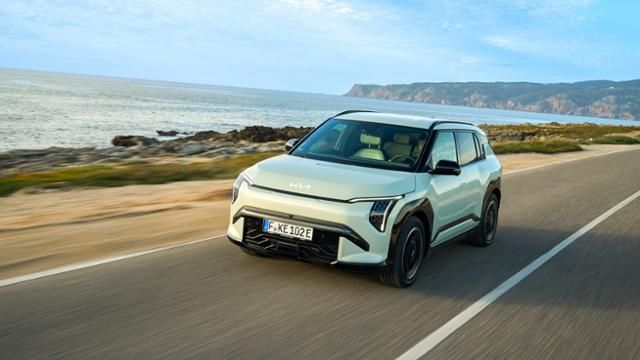
From a strategic standpoint, launching a vehicle that is suddenly priced out of its target segment is a non-starter. It risks undermining the brand’s value proposition and confusing consumers. Kia isn’t just selling cars; they’re selling an experience and a brand promise. Diluting that with a mispriced product would be a costly mistake. For the EV4 to return to the U.S. launch agenda, we’ll need to see sustained stability and, ideally, further reductions in the automotive import duties that currently constrain its viability. This isn’t just about government policy; it’s about the financial models that underpin every single vehicle program.
The EV3: A Glimmer of Hope Amidst the Storm
While the EV4’s fate hangs in the balance, its crossover counterpart, the Kia EV3, appears to have a clearer path to the U.S. market. This distinction highlights a crucial trend in the current EV market trends 2025: the enduring strength of the small SUV segment. American consumers, more than ever, gravitate towards the practicality, versatile cargo space, and perceived safety of crossovers.
The EV3, a compact electric SUV, taps directly into this demand. Even with potential tariff-related price increases, the sheer volume and inelasticity of the small SUV market make its EV product launch more defensible. However, the challenge of delivering it as a truly “lower-cost” EV—again, likely targeting under $40,000—persists. The broader question for both the EV3 and Kia’s overall EV strategy is how competitively priced they can realistically be in a market where consumers are increasingly scrutinizing electric vehicle value propositions.
The U.S. EV market itself has undergone a significant recalibration. After years of explosive growth, largely fueled by early adopters and generous federal incentives like the now-expired EV tax credit, the market has pivoted towards pragmatism. While initial demand surges were impressive, the real test lies in attracting mainstream buyers who prioritize affordability, charging infrastructure accessibility, and proven range. Kia witnessed its U.S. EV sales dip to 4 percent last month, a stark contrast to the market’s previous 10 percent share. This isn’t a death knell for EVs, but a clear signal that the market is maturing and becoming more discerning. My long-standing observation is that consumers pulled forward purchases to capitalize on incentives, and we won’t see a truly stable demand indicator until well into early 2026, after the initial post-credit dust settles.
The Elusive Electric Pickup: More Than Just a “Chicken Tax”
Beyond the sedans and crossovers, Kia’s strategic challenges extend to one of the most hotly contested segments in the American automotive landscape: the pickup truck. Earlier this year, there was tangible excitement around Kia officially confirming an electric pickup truck development for the U.S. market. Now, however, that project has reportedly reverted to the “evaluation stage.”
This retreat isn’t just about tariffs on the finished product; it’s a reflection of the intense volatility seen in the nascent electric truck market. The roller coaster ride of the Ford F-150 Lightning’s pricing strategy and its ongoing production adjustments serve as a cautionary tale. Entering this segment requires not just a compelling product, but a deeply resilient production and pricing strategy.
Then there’s the infamous “chicken tax.” Dating back to 1964, this 25 percent tariff on imported light trucks has been a formidable barrier for any foreign automaker contemplating bringing an international pickup model to the U.S. market. For Kia, considering a model like the Tasman pickup, already sold in Australia, the combination of the chicken tax plus general import tariffs makes it financially unfeasible. We’re talking about an effective 50 percent duty on a truck that would already need to be competitive on price and features. It’s simply “no way,” as Kia executives aptly put it. This forces Kia to either undertake costly domestic production, a significant investment, or shelve the idea entirely, highlighting how entrenched trade policies can profoundly shape automotive market entry strategies.
Broader Implications: The Affordability Pinch Across the Board
The tariff turmoil isn’t confined to Kia’s future EV lineup alone. The insidious nature of these duties permeates the entire supply chain, impacting production costs for all vehicles, including popular gasoline-powered models. Industry experts have been predicting a 4 to 8 percent price hike across the board for various vehicles due to these escalating costs. While many automakers, including Kia, have so far absorbed these increased expenses to maintain competitive pricing and market share, this strategy is ultimately unsustainable.
Kia’s executives are vocal about reaching a breaking point. They’ve weathered eight months of elevated tariffs, absorbing costs that others have passed on, often seeing a corresponding dip in competitors’ sales. However, this cannot continue indefinitely. The financial reality is that, at some juncture, these supply chain cost increases must be reflected in the sticker price. This could impact beloved price-conscious imports like the K4 sedan and Seltos crossover, pushing them into higher price brackets and potentially eroding their competitive edge.
The delicate balance for automakers is maintaining consumer affordability without sacrificing profitability. In a market where consumer purchasing power is already stretched by inflation and interest rates, even a modest price increase can deter potential buyers. This puts immense pressure on strategic pricing decisions, forcing brands to evaluate every component cost, every logistical expense, and every market segment.
Kia’s Strategic Adaptations and the Road Ahead
In response to these challenges, Kia isn’t sitting idly by. They are actively leveraging their U.S. manufacturing capabilities at their Georgia plant, which currently produces key models like the Telluride, Sorento, Sportage, EV9, and EV6. While this plant focuses on larger, higher-margin models, Kia has demonstrated flexibility by shifting production capacity between its EV9/EV6 and its internal combustion engine (ICE) models as market demand and profitability dictate. This ability to flex production is crucial for navigating volatile market conditions and mitigating some of the tariff impact, particularly for vehicles that qualify for domestic production incentives.
However, U.S. production capacity, while valuable, has its limits. It cannot single-handedly offset the broad impact of tariffs on imported components or fully address the economic viability of every potential model in Kia’s global portfolio. The company possesses an impressive array of EVs sold successfully in other markets worldwide, representing a wealth of options that could theoretically bolster its U.S. lineup. The prerequisite, however, remains clear: tariff resolution and a stable, predictable market environment.
From an expert’s vantage point, the long-term outlook for Kia in the U.S. EV market is promising, driven by compelling product design, technology, and brand reputation. But the journey through 2025 and into 2026 will continue to be punctuated by strategic pauses and crucial decisions. The fundamental question isn’t whether Kia can build desirable EVs, but whether the geopolitical and economic frameworks will allow them to be delivered to American consumers at a price point that makes widespread adoption a reality.
Navigating the Future: A Call to Action
The dynamic interplay of global trade, government policy, and evolving consumer preferences creates an incredibly complex but equally fascinating landscape for the automotive industry. Kia’s current challenges offer a microcosm of these broader forces, demonstrating how seemingly distant political decisions can directly impact the cars we drive and the prices we pay.
As we move further into 2026, the resolution of tariff disputes and the stabilization of the EV market will be paramount. For consumers, staying informed about these developments is key to making educated purchasing decisions. For policymakers, understanding the direct consequences of trade measures on innovation and affordability is critical.
Want to stay ahead of these rapidly evolving market dynamics and understand how they’ll shape your next vehicle purchase? Join our expert community for exclusive insights and real-time updates on Kia’s U.S. EV strategy and the broader automotive industry. Let’s navigate the future of driving together.