



The Silicon Brain Revolution: How Drako Motors is Driving Down Automotive Complexity and Cost
San Jose, CA – December 23, 2025 – For years, a subtle yet pervasive issue has plagued the automotive industry, driving up costs and complicating vehicle design: the intricate web of specialized electronic control units (ECUs) and proprietary communication protocols. This decade-long challenge has seen software costs escalate dramatically, now representing a significant portion of a vehicle’s total value. Enter Drako Motors, a company founded by silicon industry veterans Dean Drako and Shiv Sikand, who, after a decade of development and a successful proof-of-concept vehicle, are poised to fundamentally alter how we think about automotive electronics and the very accessibility of advanced vehicle features. Their innovation, Drako DriveOS, promises to bring the sophistication of hypercars to the everyday sedan, drastically reducing complexity and, consequently, automotive software costs.
From Silicon Valley to the Supercar Track: A Decade of Engineering
Dean Drako and Shiv Sikand are no strangers to complex engineering challenges. Their prior success in founding IC Manage, a leading design-data management platform for the semiconductor industry, provided them with the expertise and financial backing to pursue their automotive passion. This passion project, Drako Motors, was born out of a vision to create a more efficient and integrated approach to vehicle electronics.
Their core thesis for Drako DriveOS centers on a centralized compute platform that communicates directly with sensors and actuators. This radical departure from the traditional dispersed ECU architecture aims to slash communication latency, unlocking significant improvements in vehicle performance, safety, and cybersecurity. While the concept echoes similar ambitions seen in modern electric vehicles aiming for precise torque vectoring, Drako’s approach elevates this to a new level of integration, envisioning a single, powerful “brain” governing all aspects of the vehicle.
The ultimate proving ground for their ambitious operating system? A 1,200-horsepower, four-motor electric vehicle. This allowed them to not only demonstrate unparalleled torque vectoring but also to integrate all safety, infotainment, and driving dynamics functions under a unified digital command center. Recognizing the lack of suitable four-motor EV platforms for their OS in 2014, Drako Motors took the ambitious step of building their own – the Drako GTE. This bespoke supercar, a testament to their engineering prowess, even saw a collaboration with Pankl Racing Systems for its ultra-high-strength half-shafts, a technology now adopted by other leading electric hypercar manufacturers.
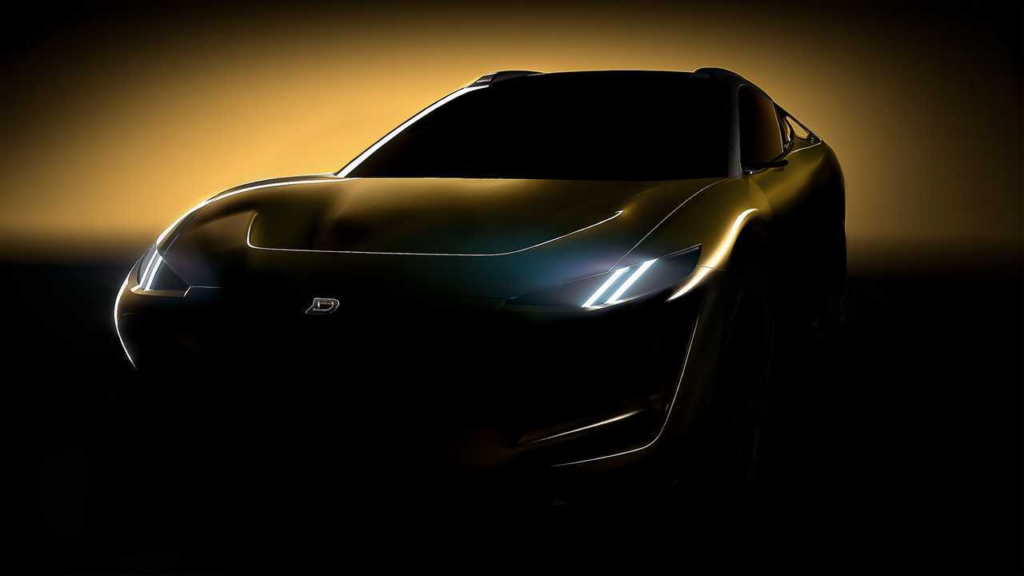
The Drako GTE and Dragon: Showcasing the Future of Automotive Tech
While the GTE serves as the ultimate demonstration platform for Drako DriveOS, it’s important to understand its genesis. To expedite development of non-powertrain components like glass, hinges, and interior trim, the GTE is built upon the chassis of the Fisker Karma. However, its transformation is profound, featuring a completely redesigned and electrified powertrain with a substantial 90 kWh battery pack integrated into the tunnel and under a raised floor. The combined output of this electrified marvel is an astounding 1,200 horsepower. Initially slated for a limited production run of 25 units with a price tag of $1.25 million, the GTE is currently under construction.
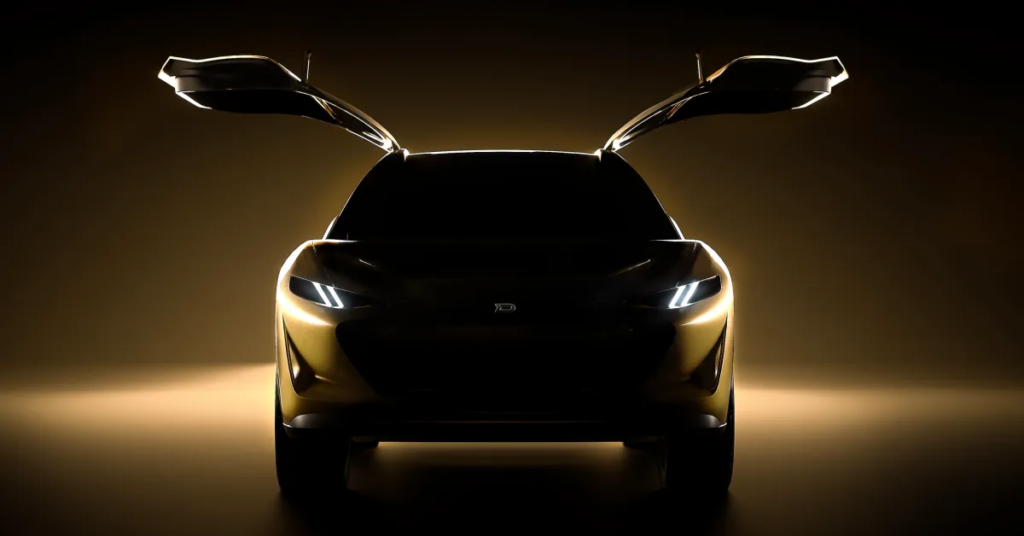
Following the GTE, Drako Motors is also developing the Drako Dragon, a five-seat SUV that embodies the company’s commitment to bringing advanced technology to a broader market. Featuring dramatic gullwing doors and a staggering 2,000 horsepower, the Dragon is projected to have a more accessible price point of $300,000. However, the true value proposition of both the GTE and Dragon lies not just in their exhilarating performance but in their role as living laboratories for Drako DriveOS, demonstrating its transformative potential for vehicle electronics integration.
The Escalating Cost of Automotive Software: A Growing Concern
The numbers paint a stark picture of the escalating complexity and cost within the automotive industry. In 1980, software constituted a mere 10 percent of a vehicle’s total cost. Fast forward to today, and that figure has ballooned to an alarming 30-40 percent. Projections indicate that the integration of advanced safety and autonomous driving features will push this number to a staggering 50 percent by 2030. This exponential rise in automotive software development costs is a significant factor contributing to the soaring prices of new vehicles.
Deconstructing Traditional Automotive Electronic Architectures
The automotive industry, historically, has been a notable laggard in adopting modern computing paradigms. Unlike consumer electronics, which have long transitioned from numerous specialized chips to powerful, general-purpose processors, the automotive sector has clung to a decentralized architecture comprising dozens, if not hundreds, of bespoke Electronic Control Units (ECUs). Each ECU manages a specific function – from anti-lock braking and airbag deployment to seat massagers and even scent dispensers – operating on its own dedicated real-time operating system (RTOS).
This reliance on a multitude of specialized controllers is partly a consequence of the industry’s historical shortage of software-savvy engineers. Suppliers, often developing these ECUs, argued that ubiquitous operating systems like Windows or Linux were not inherently designed to handle the stringent real-time processing demands and deterministic behavior required for safety-critical automotive applications. Consequently, the “safest” and most pragmatic solution was to isolate functions into their own controlled environments.
The byproduct of this approach is a complex and costly network of interconnected ECUs, often referred to as “spaghetti wiring.” This intricate web not only adds significant weight and manufacturing complexity but also presents numerous cybersecurity vulnerabilities – or “attack surfaces” – that hackers can exploit. We’ve seen instances where vehicle functions have been compromised through seemingly innocuous pathways, such as radio systems or even head and taillights, highlighting the inherent risks of such distributed architectures. The pursuit of robust automotive cybersecurity solutions has become paramount.
The Drako DriveOS Paradigm Shift: Simplicity, Safety, and Affordability
Drako DriveOS offers a compelling alternative, fundamentally reimagining the vehicle’s electronic nervous system. The foundation of their innovation lies in addressing the critical challenge of real-time processing within a widely adopted and versatile operating system like Linux. While Linux is the backbone of much of the digital world, its standard implementation lacks the deterministic, interrupt-free performance necessary for safety-critical functions.
To overcome this, Drako, in collaboration with Richard West of Boston University, developed Quest V. This innovative system introduces novel kernels and “data pipes.” Kernels, the fundamental bridges between hardware and software, are crucial for managing system resources. Drako’s kernel acts as a sophisticated hypervisor, ensuring that applications access hardware in a secure and consistent manner.
The true genius of Drako DriveOS lies in its proprietary “data pipe” mechanism. This ingenious feature creates a direct, memory-based connection between the safety-critical processor and the dedicated hardware responsible for receiving safety data. This effectively creates secure, isolated “walls” around safety-critical tasks, preventing interference from less critical inputs like tire pressure sensors or ambient light detectors. By eliminating these “distractions,” Drako DriveOS can reliably operate safety systems on a Linux backbone, achieving the real-time automotive control previously thought impossible outside of proprietary RTOS.
Streamlining Communications, Slashing Costs, and Embracing USB
Beyond its core processing architecture, Drako DriveOS significantly simplifies communication between the central processor and the vehicle’s various sensors and actuators. While the system can interface with legacy protocols like Ethernet, CAN, Flexray, and LIN, it introduces a transformative shift by leveraging the ubiquitous Universal Serial Bus (USB) protocol.
Traditional automotive communication protocols often require the central processor to translate commands before transmission and after reception, introducing significant latency. Shiv Sikand notes that even high-speed Ethernet can take upwards of 514 microseconds to respond, while USB currently achieves around 108 microseconds. This latency, though seemingly small, can have a tangible impact on vehicle responsiveness.
Crucially, every standard Intel processor comes equipped with integrated USB support. This allows Drako DriveOS to send commands directly to sensors and actuators without the need for complex translations. Near the components themselves, only a simple, cost-effective pin connector is required to direct USB signals to their intended destinations – be it lights, seats, or climate control systems. This eliminates the need for expensive, custom silicon required by other networks, potentially saving $4-$10 per connection. As vehicles move towards higher levels of autonomy, the massive bandwidth of USB becomes increasingly essential. USB 5, for instance, promises to deliver 80 gigabits per second, a stark contrast to the maximum 20 megabits per second of CAN XL (even after compression and with inherent latency). Commodity cameras, a vital component for advanced driver-assistance systems (ADAS) and autonomous driving, already communicate natively over USB, further simplifying integration and reducing automotive component costs. This focus on USB integration in automotive is a significant differentiator.
Fortifying the Digital Fortress: Enhanced Cybersecurity with Drako DriveOS
The decentralized nature of traditional automotive electronics, with its multitude of ECUs and communication pathways, creates a vast landscape of potential entry points for cyber threats. Drako DriveOS fundamentally alters this landscape by presenting a single, consolidated attack surface.
By operating on a powerful PC core, the system consolidates control and communication functions. Furthermore, USB, as an infrastructure designed for device control rather than just a communication protocol, allows Drako DriveOS to establish its own secure communication protocols. These proprietary protocols are inherently more difficult to hack than industry-standard protocols like CAN or Ethernet, which are well-documented and understood by potential attackers. This inherent security advantage positions Drako DriveOS as a leading solution for next-generation automotive cybersecurity.
The Road Ahead: Democratizing High-Performance Automotive Technology
Shiv Sikand eloquently encapsulates the Drako mission: “Bill Gates put a PC on everyone’s desk, and everyone’s still got one on their desk. We want to put another one in their car.” Drako Motors is not pursuing an exclusionary strategy with its groundbreaking software. They are actively seeking licensing opportunities for Drako DriveOS, recognizing its potential to revolutionize the entire automotive industry. A modest licensing fee of a couple of hundred dollars per vehicle, applied across the millions of cars produced annually, would represent a substantial return on their multi-million-dollar investment while making advanced features accessible to a much wider consumer base.
Having experienced firsthand the tangible benefits of reduced latency in vehicle dynamics – from improved cornering and acceleration to more precise braking – as demonstrated in vehicles like the BMW iX3, and knowing the car enthusiasts behind Drako Motors and their passion for driving excellence, it’s clear that Drako DriveOS represents a significant leap forward. Their decade of dedication to solving complex engineering challenges, combined with their silicon valley expertise, positions them to profoundly impact not only the future of automotive electronics but also the affordability and appeal of every car on the road.
Are you ready to experience the future of automotive innovation? Explore how Drako DriveOS can transform your next vehicle purchase or become a part of the automotive revolution by learning more about licensing opportunities today.