



The Central Nervous System Revolution: How Drako DriveOS is Rewriting Automotive Architecture for the Masses
The automotive industry, for all its technological leaps, has found itself at a peculiar crossroads. Modern vehicles, lauded for their advanced features and dazzling displays, are simultaneously becoming prohibitively expensive and bewilderingly complex. Decades of incremental development, often driven by specialized suppliers, have resulted in a labyrinthine network of independent electronic control units (ECUs), each with its own proprietary software and communication protocols. This architectural approach, while functional, has ballooned development costs, introduced significant security vulnerabilities, and ultimately passed the financial burden onto the consumer.
However, a paradigm shift is emerging from the heart of Silicon Valley, spearheaded by entrepreneurs with a profound understanding of both silicon and automotive passion. Drako Motors, founded by Dean Drako and Shiv Sikand – veterans of the semiconductor design software industry with their successful venture, IC Manage – is poised to fundamentally alter how vehicles are engineered, bringing the sophisticated capabilities of high-performance machines to the everyday car. Their ambitious undertaking, Drako DriveOS, is not merely an operating system; it’s a blueprint for a more efficient, secure, and affordable automotive future.
From Silicon Valley to the Supercar: A Decade of Proof
The genesis of Drako DriveOS lies in a desire to prove a radical concept: a centralized computing platform that communicates directly with a vehicle’s sensors and actuators. The promise? Drastically reduced latency, leading to enhanced performance, unparalleled safety, and robust cybersecurity. This vision echoes concepts seen in contemporary automotive advancements, such as BMW’s “Heart of Joy” initiative, but Drako’s ambition amplifies it significantly. Imagine a single, powerful “brain” dictating the precise actions of every wheel, every safety system, and every infotainment feature, all with near-instantaneous response.
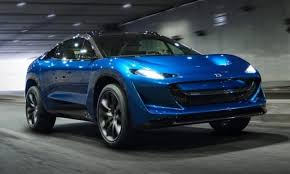
The most compelling way to demonstrate the transformative potential of their operating system, the Drako team reasoned, was within a flagship vehicle. This led to the creation of the Drako GTE, a 1,200-horsepower, four-motor electric hypercar. This was not a simple retrofitting exercise; in 2014, the four-motor EV architecture was nascent. Thus, they built their own platform to showcase DriveOS’s capabilities, including its ability to meticulously control individual wheel torque for optimal handling and performance. A testament to their engineering prowess, Drako Motors even partnered with Pankl Racing Systems to develop specialized, ultra-high-strength half-shafts for the GTE, a technology now adopted by other leading electric hypercar manufacturers.
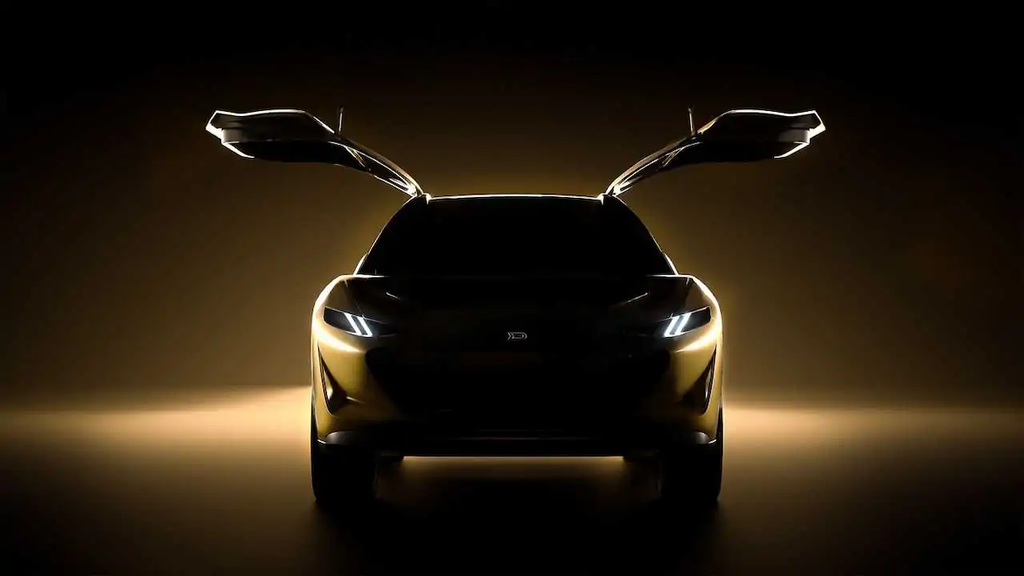
The Drako GTE sedan, a stunning machine built upon a heavily re-engineered Fisker Karma chassis, features 90 kWh of batteries integrated into the central tunnel and floor. Producing a formidable 1,200 horsepower, its initial planned production run of 25 units commanded a price tag of $1.25 million. More recently, Drako introduced the Dragon SUV, a five-seat, two-gullwing door marvel boasting an astounding 2,000 horsepower and a more accessible $300,000 price point. While these vehicles are remarkable in their own right, their primary purpose is to serve as the ultimate proving ground for Drako DriveOS.
The Escalating Software Burden: A Critical Industry Challenge
The economic realities of modern automotive manufacturing are starkly illuminated by the skyrocketing cost of vehicle software. In 1980, software represented a mere 10% of a vehicle’s total cost. Today, that figure has surged to an astonishing 30-40%, with projections indicating it will reach 50% by 2030, fueled by the insatiable demand for advanced safety and autonomous driving features. This exponential increase in software-related expenditure directly translates to higher vehicle prices for consumers.
This trend has created a critical disconnect within the automotive industry. While the broader technology sector has embraced the transition from bespoke, specialized processors to versatile, commodity computing cores – the same silicon powering our desktops, gaming consoles, and smartphones – the automotive realm has lagged significantly.
Several factors contribute to this inertia. A primary hurdle is the perceived scarcity of software-savvy engineers within traditional automotive manufacturers. Furthermore, established industry players have often cited the limitations of mainstream operating systems like Linux and Windows in handling the stringent real-time processing demands of safety-critical applications. The argument often presented is that ensuring utmost safety and reliability necessitates dedicated, single-function controllers, developed by specialized Tier 1 suppliers.
This decentralized approach has resulted in a proliferation of hundreds, if not thousands, of individual ECUs. Each unit typically runs its own miniature real-time operating system and communicates through a complex, often proprietary, web of “spaghetti wiring.” This intricate network, while functional, creates an enormous “attack surface” for cyber threats. Hackers can exploit vulnerabilities in seemingly innocuous components, such as headlamps or even radio systems, to gain unauthorized access to the vehicle’s entire communication network. The proliferation of these ECUs not only inflates cost but also introduces significant complexity and vulnerability.
Drako DriveOS: A Unified and Secure Architecture
Drako DriveOS presents a compelling alternative to this entrenched, decentralized model. The core of their innovation lies in overcoming the limitations of standard operating systems for real-time applications. While Linux is ubiquitous and powerful, its deterministic, interrupt-driven nature makes it unsuitable for prioritizing safety-critical data without potential interference from less crucial inputs, such as tire pressure sensors or ambient light detectors.
To address this, Drako, in collaboration with Dr. Richard West of Boston University, has developed “Quest V.” This innovative solution centers on novel kernel design and a unique “data pipe” architecture. Kernels, the fundamental building blocks of an operating system, act as the essential interface between hardware and software, managing system resources. In Drako DriveOS, these kernels function akin to hypervisors, creating secure, isolated environments for critical tasks.
The “data pipe” is the linchpin of this system. It creates a direct, memory-based connection between the safety-critical processor and the dedicated silicon responsible for receiving safety-critical data. This effectively “walls off” these vital functions, ensuring they remain unhindered by less urgent system processes. By dedicating processing power and isolating critical data streams, Drako DriveOS can leverage the familiarity and power of a Linux backbone while guaranteeing the real-time performance and determinism required for advanced safety and autonomous driving.
Streamlining Communication, Slashing Costs, and Enhancing Cybersecurity
Beyond its core processing architecture, Drako DriveOS also reimagines vehicle communication protocols, offering substantial benefits in terms of efficiency, cost, and security. While DriveOS can interface with existing industry-standard protocols like Ethernet, CAN, and LIN, many of these legacy systems introduce inefficiencies. The typical requirement for translation and conversion of commands between the central processor and these diverse protocols, coupled with their inherent speed limitations, contributes to latency. As Shiv Sikand points out, even the fastest Ethernet response times can be measured in hundreds of microseconds, while USB can achieve significantly lower latency.
The true game-changer lies in Drako’s adoption of Universal Serial Bus (USB) technology for internal vehicle communication. Every modern Intel processor seamlessly integrates USB, the protocol that enables your computer to communicate with peripherals like mice and keyboards. By utilizing USB, the central processor can send commands directly to sensors and actuators without the need for cumbersome translation layers. This dramatically reduces latency and simplifies the hardware architecture.
Furthermore, at the sensor and actuator level, only a simple, cost-effective pin connector is required to direct USB signals. This eliminates the need for expensive custom silicon often required by proprietary networks, representing a potential saving of $4-$10 per connection, according to Sikand. The sheer bandwidth advantage of USB is also critical for future autonomy. USB 5, for instance, will offer a staggering 80 gigabits per second, dwarfing the 20 megabits per second of CAN XL (which itself requires data compression). Commodity cameras, increasingly vital for advanced driver-assistance systems (ADAS) and autonomous driving, also natively communicate over USB, further simplifying integration.
The cybersecurity benefits are equally profound. Traditional automotive networks, with their multitude of ECUs and communication protocols, present numerous entry points for malicious actors. Drako DriveOS, by consolidating critical functions onto a single, powerful PC core, significantly reduces the attack surface. Moreover, USB’s fundamental nature as an infrastructure for device control, rather than merely a communication protocol, allows the DriveOS software to establish its own highly secure communication protocols. These custom protocols are inherently more difficult to hack than standardized protocols like CAN or Ethernet, offering a robust defense against evolving cyber threats.
Democratizing Innovation: A Software Solution for Every Vehicle
The mission of Drako Motors, as articulated by Shiv Sikand, is ambitious yet grounded: “Bill Gates put a PC on everyone’s desk, and everyone’s still got one on their desk. We want to put another one in their car.” This vision extends beyond the realm of hypercars. Drako Motors is not seeking to monopolize its groundbreaking technology. They are actively pursuing licensing opportunities for Drako DriveOS, recognizing its potential to revolutionize the entire automotive spectrum.
The economic model is straightforward: a licensing fee of a few hundred dollars per vehicle, applied across an estimated 30 million new cars annually, would represent a substantial return on the millions invested in DriveOS development, while also making advanced automotive features accessible to a much broader market. The implications are far-reaching. Imagine sophisticated torque-vectoring for enhanced handling, advanced predictive safety systems, and seamless over-the-air updates becoming standard features, not exclusive luxuries.
Having personally experienced the tangible benefits of reduced latency in vehicles like the BMW iX3 – the improved cornering, acceleration, and braking are undeniable – and knowing the deep automotive passion and engineering acumen of Dean Drako and Shiv Sikand, evidenced by their personal collection of iconic vehicles and their meticulous approach to performance, we can confidently state that their vision for a smarter, safer, and more affordable automotive future is not just plausible, but is actively being engineered into existence. The era of the centralized automotive nervous system has begun.
Are you an automotive enthusiast, an industry professional, or simply curious about the future of driving? Explore the possibilities of advanced automotive technology and discover how innovation is making sophisticated vehicle features more accessible than ever before. Connect with us to learn more about the transformative potential of intelligent vehicle architectures.