
Tesla Door Malfunctions: Examining a Critical Safety Concern and Its Impact on Automotive Innovation
In the rapidly evolving landscape of electric vehicles, safety remains paramount. While manufacturers push the boundaries of innovation, a critical concern has emerged regarding the functionality of vehicle doors, particularly in post-collision scenarios. Recent investigative reports, most notably from Bloomberg News, have highlighted a disturbing trend: Tesla doors that won’t open, potentially leading to tragic outcomes. This comprehensive examination delves into the intricacies of this issue, drawing upon expert insights and updated industry trends as of early 2025, to provide a nuanced understanding of the problem and its implications for automotive safety and design.
The core of this emerging crisis lies in the sophisticated electronic door release mechanisms employed by many modern vehicles, including a significant number of Tesla models. Unlike traditional mechanical handles, these systems rely on electrical power. In the unfortunate event of a severe accident, particularly one that compromises the vehicle’s electrical system, these electronic handles can become inoperable. This failure to open can trap occupants inside, a horrifying scenario when compounded by other post-crash hazards such as fire.
Understanding the Genesis of the Problem: Electronic vs. Mechanical Systems
For decades, car doors have been opened via robust, purely mechanical linkages. A pull of the handle engaged a series of rods and levers that physically released the latch mechanism. This system, while simple, is inherently reliable. It operates independently of any electrical power source, meaning a crashed vehicle with a dead battery could still, in theory, have its doors opened mechanically.

However, the pursuit of sleek design and advanced features has led automakers, including Tesla, to adopt electronic door handles. These systems often feature flush-mounted buttons or touch-sensitive surfaces that, when activated, send an electronic signal to a solenoid or motor that retracts the latch. The appeal is undeniable: cleaner aesthetics, reduced wind noise, and the potential for integration with other vehicle systems.
The critical vulnerability arises when the vehicle’s 12-volt battery, the power source for these electronic systems, is compromised during a crash. Impact forces can sever wires, short circuits can drain the battery instantly, or the battery itself might be damaged. In such instances, the electronic signal cannot be sent, and the door remains stubbornly shut. This isn’t an isolated issue confined to a single model or manufacturer. As Bloomberg’s extensive investigation revealed, approximately 70 models currently on U.S. roads utilize electronic door handles. However, the sheer volume of consumer complaints directed at Tesla suggests a disproportionate impact on their vehicles, prompting serious scrutiny.
The Grim Statistics: A Growing Cause for Concern
The most alarming aspect of this issue is the reported correlation with fatalities. Bloomberg’s investigation, which meticulously analyzed crash data from 2012 through early 2025, identified at least 15 deaths directly linked to Tesla doors that failed to open following an accident. This figure, while representing a small fraction of overall fatal electric vehicle crashes, is particularly chilling because it highlights a preventable human tragedy.
The methodology employed by Bloomberg involved sifting through thousands of pages of official reports from law enforcement, fire departments, and medical examiners. Independent verification for the most recent incidents in 2024 and 2025 was undertaken, with the news service also examining supplementary evidence such as photographs, 911 call audio, and police body-camera footage. This rigorous approach lends significant weight to their findings, moving beyond anecdotal evidence to a statistically supported concern.
What exacerbates this situation is the apparent worsening trend. More than half of the reported fatalities linked to inoperable Tesla doors have occurred since November 2024, indicating that the issue is not a historical anomaly but a contemporary and potentially escalating problem. This suggests that perhaps newer vehicles, despite their advanced technology, are not adequately addressing the fundamental safety imperative of egress in the event of a crash.
The Challenge of Data Collection and Manufacturer Response
A significant hurdle in comprehensively tracking this specific safety concern is the lack of centralized, publicly accessible statistics from government agencies like the National Highway Traffic Safety Administration (NHTSA) or state-level organizations. While NHTSA does collect data on fatal car crashes, specifically tracking instances where a door malfunction contributed to a fatality is complex. Determining definitively that a door would not have opened, even with a functioning electrical system, versus the cause being directly tied to electrical failure, presents investigative challenges. The chaotic aftermath of a severe crash, especially one involving fire, makes pinpointing the exact sequence of events and the precise cause of egress failure incredibly difficult.
In response to mounting complaints and the findings of investigations, NHTSA initiated a formal investigation into the door handles of the Tesla Model Y on September 15, 2025. This action signals a recognition of the potential safety risk by regulatory bodies.
Tesla, for its part, has begun to address these concerns. The company launched a dedicated safety page on its website, featuring a section titled “Safer Aftermath: Emergency Response.” This page asserts that Tesla vehicles are designed to automatically unlock their doors following a crash, facilitating emergency access. However, crucial details remain vague. A footnote on the page indicates that this automatic unlocking feature may not be available on all models, dependent on their manufacturing build date. This ambiguity leaves owners of older Tesla vehicles in an uncertain position regarding their vehicle’s safety protocols in such critical scenarios.
The Engineering Behind the Failure: The 12-Volt Battery Vulnerability
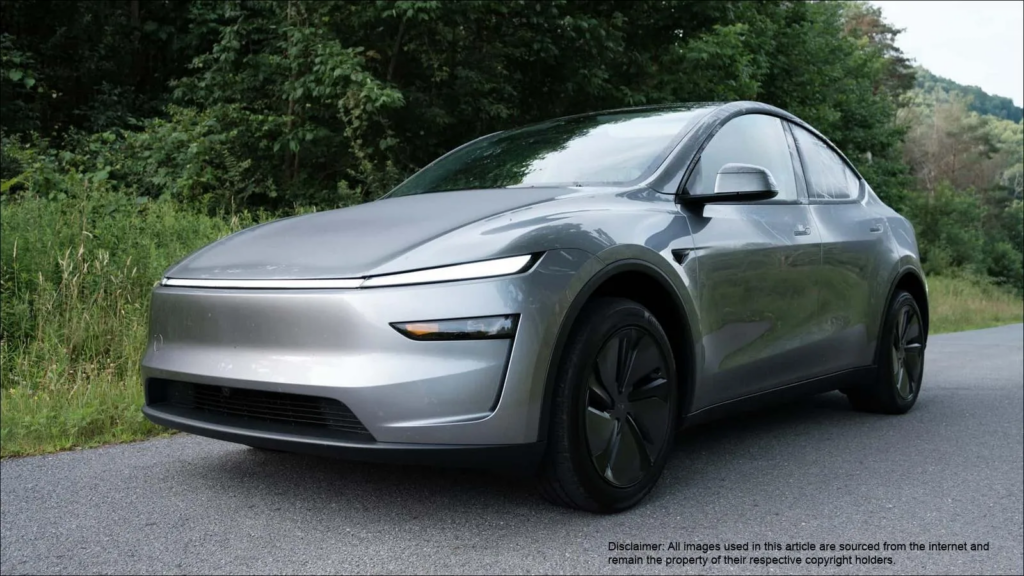
At the heart of the electronic door handle system lies the vehicle’s 12-volt battery. In internal combustion engine vehicles, this battery powers accessories like lights, infotainment, and the starter motor. In electric vehicles, while the primary motive force comes from the high-voltage battery pack, a smaller 12-volt battery is still essential for operating the vehicle’s computers, safety systems, and, crucially, the electronic door latches.
The critical vulnerability is that during a significant impact, the 12-volt battery can be instantly disabled. Wires can be torn, connections severed, or the battery itself can be damaged, leading to a complete loss of power to the door release mechanisms. This is a fundamental engineering challenge: relying on an electrical system that can be readily compromised in the very event it is intended to help you escape from.
Backup Systems: A Double-Edged Sword of Complexity and Obscurity
To mitigate this risk, many manufacturers, including Tesla, have incorporated manual backup door release mechanisms. These are intended to function even if the electrical system fails. However, the effectiveness and accessibility of these backups have become a significant point of contention.
Tesla’s owner’s manuals, for instance, do provide instructions for operating manual releases on models like the 2020-2024 Model Y. Yet, the practical reality of finding and operating these in a high-stress, post-crash situation is another matter entirely. Bloomberg’s reporting highlights that some Tesla Model 3 and Model Y vehicles lack manual releases for the rear seats altogether, leaving occupants in those positions with no recourse if the electronic system fails.
For vehicles equipped with rear-seat manual backups, their location can be highly problematic. They might be hidden under floor mats, behind speaker grilles, or concealed beneath plastic trim panels. This level of obfuscation, while perhaps aesthetically pleasing in a normal operating state, can render these critical safety features virtually impossible to locate and deploy in an emergency scenario, especially when visibility is compromised by smoke or darkness, and occupants are disoriented or injured.
This points to a fundamental design paradox: the drive for minimalist, integrated aesthetics sometimes clashes directly with the imperative for immediate, intuitive access to safety features. The user experience in an emergency is drastically different from everyday operation, and design choices must prioritize the former.
High-CPC Keywords and Related Search Intent:
Tesla door repair cost: This highlights user concern about potential repair expenses related to faulty door mechanisms, often a precursor to seeking information about the underlying cause.
Electric vehicle door safety recalls: Recalls are a significant indicator of safety issues and often drive search traffic from concerned consumers and potential buyers.
Car door stuck open emergency: While the article focuses on doors not opening, users might search for broader “car door stuck” scenarios, and information on Tesla’s issue would be highly relevant.
Automotive egress systems: This is a more technical term, likely used by industry professionals or those seeking in-depth technical analysis of vehicle safety design.
NHTSA EV safety investigations: Consumers and industry watchdogs actively monitor NHTSA actions regarding electric vehicle safety.
Tesla Model Y door handle malfunction: A highly specific keyword indicating direct user concern about a particular model.
Emergency vehicle door escape: This search intent reflects a direct need for solutions or information in critical situations.
Best electric cars for safety 2025: Buyers actively research safety features when purchasing new vehicles, making this a high-intent keyword.
EV fire safety features: Concerns about EV fires are prevalent, and door operability is a critical aspect of fire safety.
Innovations and Future Directions: Redefining Automotive Safety Standards
In the face of these challenges, the automotive industry is actively seeking solutions. Tesla’s design chief has indicated that the company is exploring integrated designs that combine mechanical and electric door handles into a single unit. This approach, if executed effectively, could offer the best of both worlds: the sleek aesthetics of electronic systems with the inherent reliability of mechanical backups.
Beyond Tesla, the broader automotive sector is grappling with how to ensure robust egress capabilities in all crash scenarios. This necessitates a paradigm shift in how we approach vehicle safety design. It’s no longer sufficient to merely pass crash tests; the focus must extend to the immediate aftermath and the crucial minutes that follow an impact.
Key areas for future development include:
Redundant Power Sources for Egress Systems: Exploring independent, crash-survivable power sources specifically for door release mechanisms, separate from the main 12-volt system. This could involve small, hardened battery packs or even supercapacitors designed to provide a short burst of power for door operation.
Enhanced Manual Release Accessibility: Rethinking the design and placement of manual releases. In an ideal scenario, they should be intuitively located, clearly marked, and easily operable with minimal force, even by someone with limited mobility or under duress. This might involve external access points or highly standardized internal locations that emergency responders are trained to find.
Smart Door Systems with Integrated Diagnostics: Developing “smart” door systems that can self-diagnose their operational status. In the event of a crash, these systems could communicate their status to occupants and emergency responders, indicating whether doors can be opened electronically, mechanically, or if they are completely sealed.
Advanced Egress Training for First Responders: Ensuring that firefighters, paramedics, and other emergency personnel are thoroughly trained on the specific egress mechanisms of all types of vehicles, including the complexities of electric vehicles and their various door release systems. This requires ongoing education and standardized protocols.
Regulatory Mandates for Egress Functionality: Proactive regulatory bodies may need to establish clearer mandates for vehicle egress systems, ensuring that all new vehicles are equipped with reliable methods for occupants to escape, regardless of the power source’s integrity following a crash. This would drive innovation and prevent safety compromises for the sake of design.
The pursuit of Tesla door repair cost information often stems from underlying fears about the reliability of these advanced systems. While repairs for standard components might be manageable, issues with critical safety systems like door releases can be more complex and costly. Therefore, understanding the root cause and potential for preventative measures is crucial for both consumers and the industry.
The discussion around electric vehicle door safety recalls is not just about isolated incidents but about establishing a benchmark for future safety standards. As the number of EVs on the road continues to surge, particularly in major metropolitan areas like Los Angeles electric car owners or New York City EV buyers, the demand for robust and transparent safety information becomes even more critical.
Conclusion: Prioritizing Life Over Aesthetics
The issue of Tesla doors that won’t open is more than just a technical glitch; it’s a stark reminder that in automotive engineering, functionality and safety must always take precedence over form. The chilling statistics underscore the urgent need for a comprehensive re-evaluation of electronic door release systems and the development of more resilient, intuitive, and universally accessible egress solutions.
As an industry expert with a decade of experience observing the rapid evolution of automotive technology, I can attest that while the innovations in EVs are breathtaking, they must be built upon an unshakeable foundation of safety. This includes anticipating the worst-case scenarios and engineering robust countermeasures. The focus on advanced features, while important, should never overshadow the fundamental human need to escape a compromised vehicle.
For Tesla and other automakers, the path forward involves greater transparency, accelerated development of reliable backup systems, and a commitment to prioritizing occupant safety in every design decision. For consumers, it means demanding transparency from manufacturers regarding safety features and staying informed about potential risks.
If you are a Tesla owner concerned about your vehicle’s door safety or are considering an electric vehicle purchase, we encourage you to thoroughly research the specific safety features of the models you are interested in. Don’t hesitate to ask your dealership direct questions about emergency egress systems and their functionality in various crash scenarios. Your safety, and the safety of your loved ones, is the ultimate measure of automotive success.